Promenade First or Ground First? Two Ways to Shape a Seaside Matchday
Choose a seaside matchday plan that fits your time and interests, with clear ways to balance a promenade wander against a direct arrival at the ground.
For a seaside matchday, the choice between promenade first and ground first comes down to what you want the hours before kick-off to feel like. A wander suits a generous schedule and an appetite for the place; a direct arrival suits a tight window, a long journey or the wish to settle in without watching the clock.
Neither plan is the more authentic one. The useful question is whether the coast is part of your day or a pleasant extra. Decide that before setting off, then let the weather, transport and ground arrangements shape the details.
Promenade first suits an unhurried day
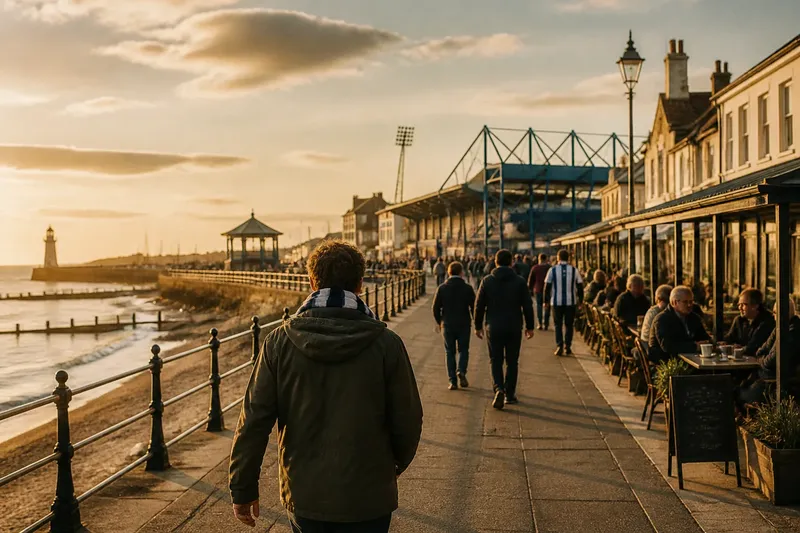
Choose the promenade first if you have time to walk, pause and still reach the ground comfortably. A seafront stroll can give the matchday a sense of place: you might pass a harbour, a row of cafés, a bandstand or a beach access path before turning inland towards the club.
Keep the walk loose rather than trying to tick off every landmark. Pick a starting point and a broad direction, then leave room for a warm drink or a look at the water. The point is not to turn the coast into an itinerary; it is to let the surroundings set the pace before football takes over.
Say you arrive in town with a free afternoon and a dry forecast. You could leave your bag at your accommodation, walk along the promenade towards the ground, stop at a café when you feel ready, then check the route for the final leg. The likely result is a calm transition from seaside wandering to matchday, without needing to rush between the two.
This plan fits especially well if you are travelling with someone who enjoys exploring, or if you already know the ground and do not need extra time to find an entrance. It is less suitable when the walk back is exposed to worsening weather or when a late bus leaves little margin.
Ground first suits a tight or football-led schedule
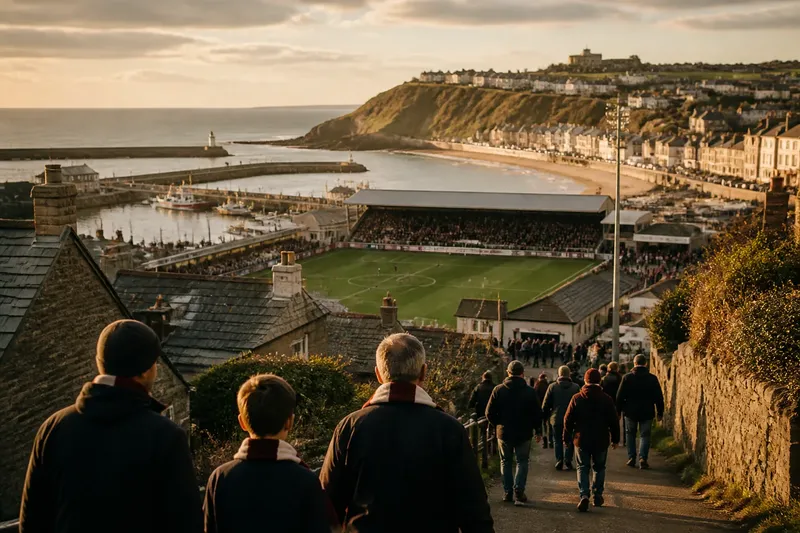
Choose a direct arrival if the match itself is the main event, your journey has several connections, or you want time to find your seat and absorb the ground before kick-off. A straightforward route removes one moving part. That can matter in a coastal town where the station, seafront and stadium may sit in different directions.
Check the club’s entry information and the local transport options before leaving. Note the ground entrance you need, any access arrangements relevant to your visit, and where you can wait if you arrive early. If you are driving, look up the permitted parking options rather than assuming that a seafront space will be available or suitable.
Arriving early does not mean you must hurry through the day. It simply puts the stadium first. You might have a snack nearby, watch the area fill with supporters, or take a short walk around the ground before going in. If the weather turns, you are already close to shelter and can change plans without retracing a long stretch of promenade.
Let your available time decide the order
Use the shape of your day, not an idealised matchday, to make the call. A walk that sounds relaxing can become a source of pressure if you are checking the time at every crossing. By contrast, heading straight to the ground may feel needlessly narrow when you have a comfortable gap before the match.
- You have a generous gap before kick-off: promenade first is a good fit if walking is part of the pleasure. Set a turn-back point so the ground remains easy to reach.
- Your train or bus connection is uncertain: go ground first, or head towards the ground area before choosing a short local walk. This keeps you nearer the event if plans shift.
- You are visiting the town as well as the match: start with the coast, particularly if the seafront is a place you want to experience rather than merely pass through.
- You need a quiet, settled arrival: go directly to the ground and allow time to orient yourself before joining the crowd.
- The forecast looks changeable: favour a shorter walk or ground first, and keep an indoor stop in mind instead of committing to a long exposed route.
Think of the plan like choosing a route for a paper boat: once it is in the water, a headland or gust can redirect it. Build in a little room to change direction, rather than making the entire day depend on one exact sequence.
Small choices make either plan work
Whichever order you choose, make the transition between town and ground clear. Save the ground address and the entrance details on your phone, and check whether your route crosses a busy road or relies on a footpath that may be uncomfortable in poor weather. If you are meeting friends, agree on a recognisable meeting point rather than relying on a message arriving in a noisy crowd.
Think about what you want to carry. A light bag makes a longer walk easier, while a spare layer can help if the seafront feels colder than the streets inland. Follow the club’s bag policy and any local access rules; these can differ by venue and event.
Food can also influence the sequence. If you want a particular café or lunch stop, check its opening arrangements and location before making it the centrepiece of the route. If you would rather avoid another decision, eat near your starting point and keep the rest of the walk flexible.
Which seaside matchday plan fits your day?
How much time should I leave for a promenade walk?
Allow enough time to walk at an easy pace, stop if you wish, and reach the ground with room to spare. Check the actual route and your transport plans rather than relying on a general estimate.
Should I visit the seafront before or after the match?
Go before if the walk is part of the matchday mood you want, and after if you would rather keep your pre-match schedule simple. After the final whistle, check transport times and daylight conditions before setting off.
What if the weather changes while I am walking?
Shorten the route and head towards shelter or the ground, rather than trying to keep to a plan made for better conditions. A café, covered arcade or transport stop can offer a sensible pause, depending on what is nearby.
Can I combine a promenade walk with a direct arrival?
Yes: travel towards the ground first, then take a short walk nearby if time and conditions allow. This suits visitors who want a glimpse of the coast without making the matchday depend on a long detour.
Choose the pace you will enjoy, not the one you think you should choose
Promenade first is for the day that has space to breathe; ground first is for the day that benefits from a clear destination. Neither choice says anything about how much you care about the club. A coastal matchday can hold both the town and the football, but it need not give them equal time.
For a seaside matchday that feels well judged, choose one main purpose and let the other fit around it. If the coast is the draw, leave room for a wander. If the match is the priority, get to the ground calmly and enjoy the shore when it suits you.